
Michigan Recent Arrests Across Counties
No official Michigan roster lists every fresh arrest by name. A police agency creates the incident record. A jail creates the booking entry only if it accepts the person. Those two records can sit with different offices. A county roster answers who is held in that facility right now. It will not show every local arrest. Someone booked and released may vanish before the next public refresh.
That split is the core of any Michigan recent arrests search. Start with the arresting agency when it is known. Then find the county or facility that took custody. A sheriff's page may point to a vendor system, a PDF snapshot, or a date-filtered report. Or it may offer nothing more than a records contact. The vendor's name on the interface does not make it the record custodian. MSP publishes selected statewide news. But it runs no statewide jail and no daily name-level booking log.
For a sample of official state-police news, the MSP News Releases page posts event-driven items. Arrests, investigations, and enforcement work all appear there. Many routine arrests never become a release. The separate MSP Arrests page walks through the newsroom and report paths. For custody checks and alerts on one person, Michigan VINE through VINELink covers participating jail and state systems. It does not track every new arrest.
The newsroom is a chosen public-information channel, not a full arrest feed. A missing release says nothing about whether an arrest happened.
Finding Michigan Arrests by County
Start with the booking county whenever the search is uncertain. A city officer, a sheriff, or MSP may hold the incident record while a county jail holds the booking record elsewhere. When the location is known, open that county's official starting point through the directory. When the city is known but the arrest county is not, check the city's own news and records links first. Then follow any documented custody route.
Keep each source tied to its job:
- Write down the known county, city, arresting agency, and approximate event date. Do not treat a same-name result as a match.
- Open the county’s official sheriff or jail page and follow its current inmate or booking link. Some counties use a vendor search; others publish a PDF or no public roster.
- Read the date label and status. “Arrest date,” “booking date,” “release date,” and “posted” can refer to different events.
- If the person is missing from a current list, ask the custodian whether the person was released, transferred, booked elsewhere, cited and released, or not yet entered.
- Use the arresting agency’s records unit for the incident record and the court portal for later case activity.
Open the Michigan County Directory → to reach county systems and local city coverage.
Michigan Jail Rosters and Photo Rules
County jail search tools follow no statewide standard. One public roster shows people currently in custody. A separate booking report may cover a past date range instead. Search fields and image display depend on each county's system and release policy. A screenshot of one county tool shows that county's interface. It is not a model every sheriff copies.
Calhoun County offers an example. Its official Police-to-Citizen inmate search supports name, age, charge, and arrest date. The county's separate RecentArrests route exists, but the module is disabled. So it is no sign of an active 24-hour feed.
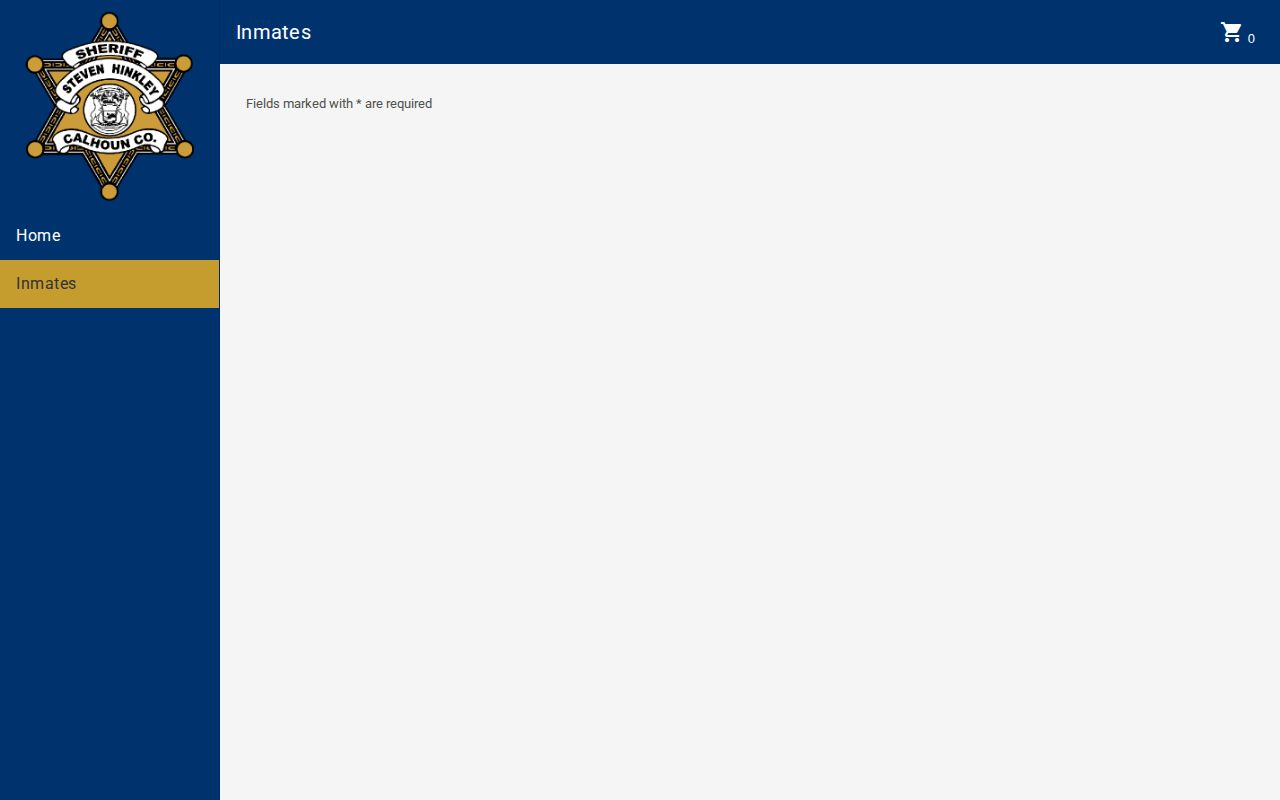
A search form can narrow current custody. Its filters do not guarantee a full arrest history. Some counties show a booking photo when one exists; others omit or restrict images. The originating agency also affects whether a photo is cleared for public display.
- Calhoun’s current inmate portal includes search filters, while its RecentArrests module was not enabled in the review.
- St. Clair’s sheriff-linked portal says it refreshes periodically during the day, without a fixed rolling window.
- Van Buren’s public roster is a current PDF snapshot, not a documented history of all arrests from the last day.
- Alpena and Gratiot link to county JailTracker views, but neither source establishes a universal photo rule or a statewide feed.
What if the roster has no name? The person may be released, cited, in another facility, or awaiting entry. A legal or agency rule can also omit someone. Ask the custodian before concluding anything.
Michigan Arrest Windows by Date
"Recent" can mean current custody, a date-filtered booking report, or a news item. It can also mean a rolling short window. Michigan counties use all of those shapes. No single cadence applies. Treat a current roster as today's custody, not today's arrests. A date filter may key on booking date. That may not match the moment an officer made the arrest.
| Public view | Michigan example | Safe reading |
|---|---|---|
| Current custody | St. Clair portal; Van Buren PDF | Who appears in a current view, subject to update and release timing |
| Date-filtered booking report | Muskegon Zuercher “Booking & Released Inmates by Date” | A system report with its own date fields, not every state arrest |
| Selected weekly blotter | Monroe County law-enforcement page | Published incidents or news items, not a full booking register |
| Official state-police news | MSP News Releases | Selected events, arrests, investigations, and safety updates |
The Muskegon County report interface offers booking and released-inmate views by date. Read its dates as the system labels them. One county report does not set a state standard.
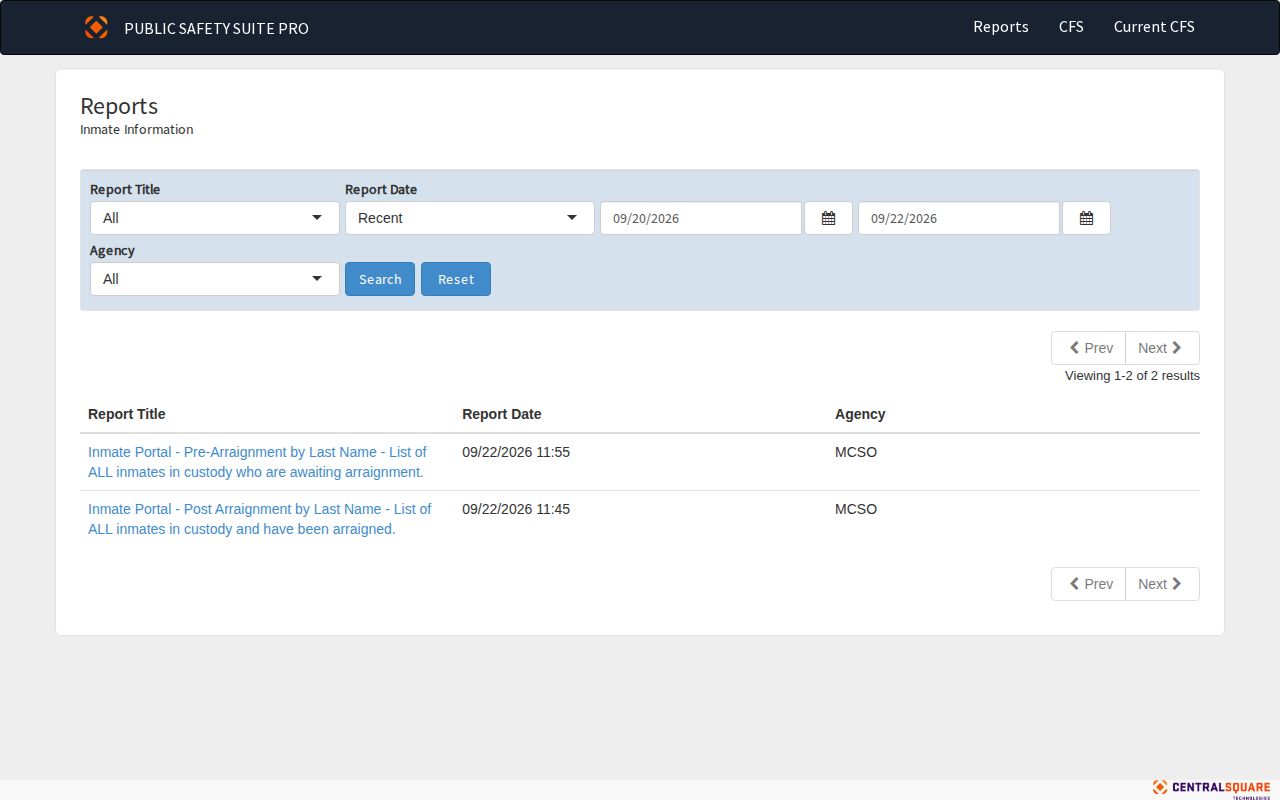
For same-day statewide coverage and county routing, see 24 Hour Arrests. The separate Arrest Log page covers multi-day reports and selected blotters.
Note: A booking can appear after transport and intake, while a release can remove a person from a current roster before a later records request is answered.
What a Michigan Booking Record Shows
A booking record is simply the jail's own paperwork. It documents intake and custody at the facility that received the person. It is not a police incident report, and it is not a court docket. Every jail builds the record differently. So the fields vary from one county to the next. FOIA also has limits here. An agency cannot be forced to create a statewide report it never kept. Nor can it be made to invent a field that does not exist. Name the custodian. Ask for the records that office actually holds. Give it room to explain any redaction or gap.
| Field or record | What it can show |
|---|---|
| Name and booking identifier | The name recorded at intake and the local number used to track that booking |
| Booking date and time | When the receiving facility recorded intake; this may differ from the arrest time |
| Arresting agency | The department that made or submitted the arrest, when recorded |
| Charges as booked | The charges entered at intake, which may change or be dismissed later |
| Bond, release, or transfer | A custody action recorded by the facility, not a final court result |
| Booking photograph | An image maintained by the custodian, if it exists and may lawfully be released |
| Case or docket number | A route to the court record when the number has been assigned and made public |
The state layer works differently. MDOC's OTIS covers state prisoners, parolees, and probationers. It also covers certain recently discharged people within its stated scope. A profile there can show supervision status and location. Offense or sentence details and sometimes a photograph appear too. Photos are not guaranteed. MDOC notes an image may be missing if none was taken. It may also be missing if the person left before electronic images were kept. OTIS will not replace the county booking entry for a new arrest or a county-jail-only stay. So start with the local custodian.
- Booking
- Recording a person’s intake into a jail or other holding facility.
- Disposition
- The court’s recorded outcome of a case or charge.
- Set-aside
- A court or statutory process that changes the public status of an eligible conviction; it does not promise deletion of every copy.
Requesting a Michigan Booking Record
When the online view falls short, write to the public body that holds the record. For a county booking jacket or booking photo, that is usually the receiving jail. It may also be the sheriff's records unit. For an MSP incident file, go to the Michigan State Police Records Resource Section. Keep the request tight. Name the person and the date range. Identify the arresting agency or facility if you know it. Ask for existing items, not a custom-built report.
Under Michigan FOIA, MCL 15.235, a public body generally gets five business days to respond. It may claim one extension of up to ten more business days. The clock covers the response, not delivery of copies. A reply can grant, deny, grant in part, or seek clarification. Fees may cover search, review, redaction or separation, copying, and mailing. Always ask for an itemized estimate and electronic copies. MSP takes requests through its Records Request Portal via MiLogin. It also accepts them by email to MSPRecords@michigan.gov. Its procedures list a $2 processing charge for portal, email, or fax payment. Record-specific fees depend on the allowed work. Requesters who meet the statutory indigency conditions can have the first $20 of qualifying labor waived.
- Identify the record keeper: county jail or sheriff for intake, the arresting department for its incident report, or MSP for MSP-held records.
- Give the full name, approximate booking or arrest date, known booking number, receiving facility, and arresting agency.
- List the existing items sought, such as a booking card, intake jacket, charge sheet, release or transfer entry, or photo if maintained and releasable.
- Ask for nonexempt portions, electronic delivery, an itemized fee estimate, and the exemption basis and appeal route for any withheld record.
County sheriffs differ. Some use their own form or records portal. Follow the county directory link and read that custodian's fee rules. FOIA reaches records that exist. It does not force anyone to build a new statewide spreadsheet. Nor does it require a rebuilt date-filtered feed. If a screenshot, log, or booking field was never created, ask the office to say so plainly. A partial response can still hand over nonexempt parts after protected fields come out.
Old jail records answer to an approved retention schedule. General Schedule 11 item 11.210 covers inmate jackets, including booking and release materials. Retention runs until release plus ten years. Destruction follows unless holds or other schedules apply. That rule governs record management. It promises nothing about a web roster staying searchable that long. The Archives of Michigan county guides can point you toward varied local holdings. They cannot confirm that a county booking-photo series exists.
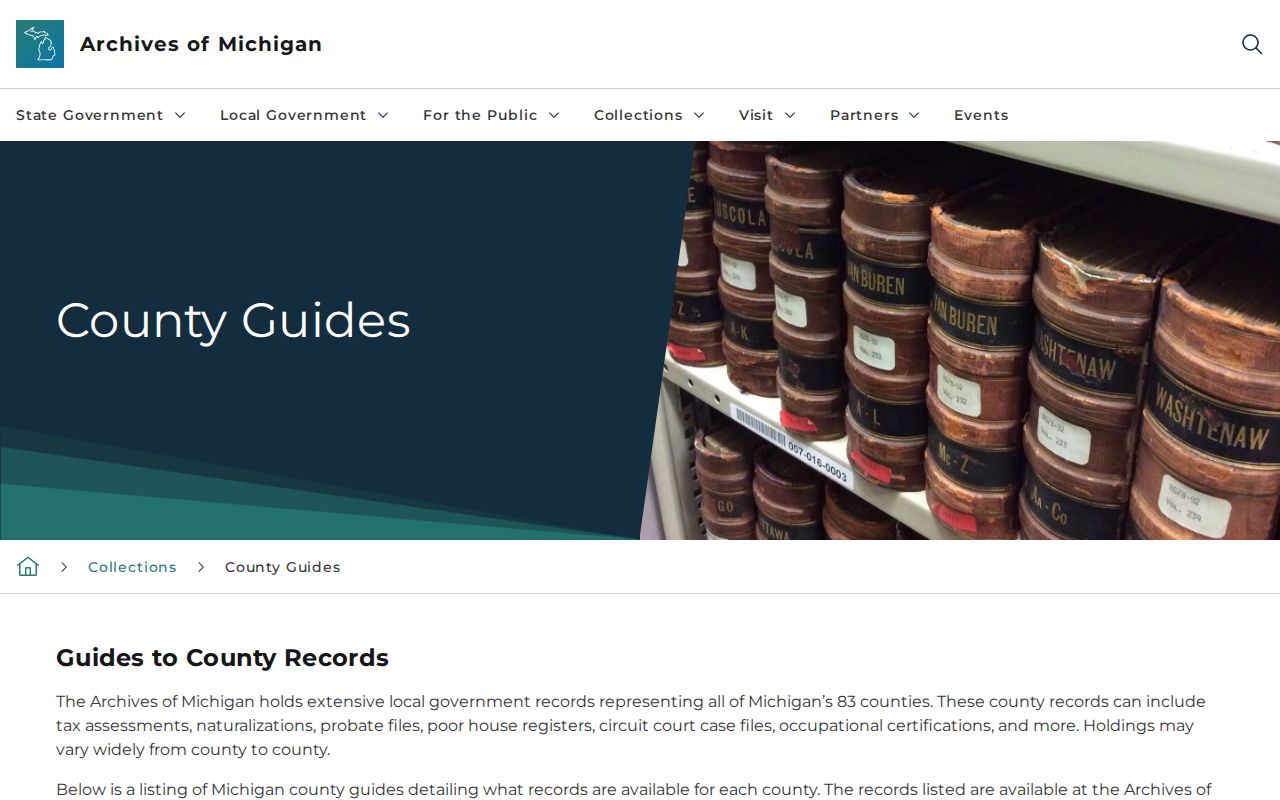
That screen holds historical county guides, not a booking-photo gallery. Ask the custodian directly whether a record was destroyed under schedule, moved to an archive, or never held at all. Note: A retention rule is not a public web-archive promise and does not show that an image was ever posted online.
Where Michigan Booking Photos Appear
Start with official sources. They name the custodian and show its current policy. A county roster may display a booking photo where rules allow. If the roster shows none, a records request is the fallback. A record absent from the web can still exist. Even an existing photo may not be releasable, so treat news and aggregator pages as secondary to government routes.
| Source | Photo or record role | Status |
|---|---|---|
| County sheriff or jail roster | Current custody and, where exposed, a booking image | Official; coverage varies by county |
| MSP SNAP photo policy | Explains agency-specific release choices | Official; does not create one statewide gallery |
| MLive and Detroit Free Press | Selected reporting, blotters, and case follow-ups | Editorial; not a booking census |
| Busted Newspaper | Selected state and county booking-style entries | Unofficial and selective |
| RecentlyBooked | Selected recent county entries | Unofficial; verify with the county |
| Mugshots.com | Michigan county-section browsing | Unofficial; older copies may remain |
| Arrests.org | Selective county, date, and charge-style views | Unofficial; no completeness claim |
| Mugshots.zone | Selected county subdomains and archive pages | Unofficial; current policy varies by page |
RecentlyBooked's Michigan landing page offers a selective, unofficial view of county entries. Its screenshot depicts a state page, not a complete list of Michigan arrests.
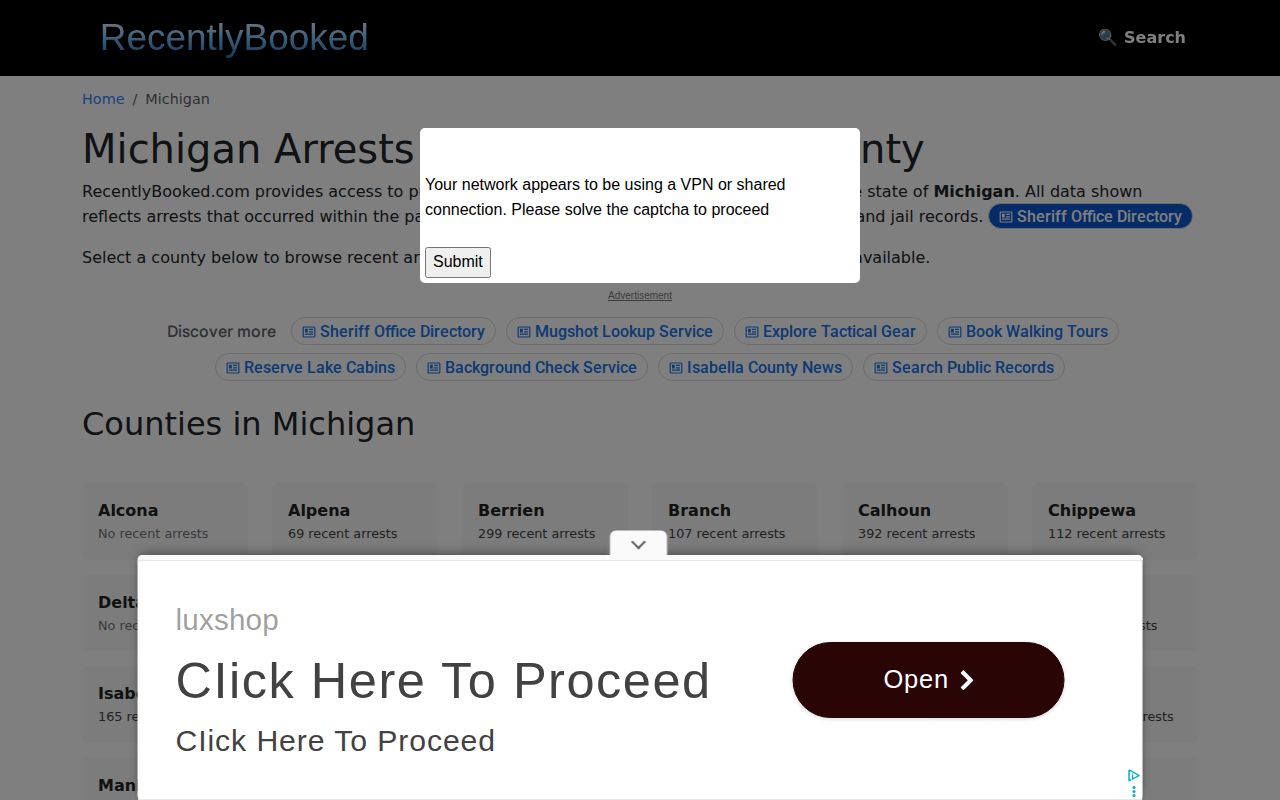
That view can lag or fall short. So confirm with the county and the later court record. Errors have a free fix path in some cases. RecentlyBooked's removal policy describes free requests for qualifying errors, wrong-person records, juvenile matters, duplicates, and sealed or expunged cases. Mugshots.com's Michigan index links selected county sections and stays a secondary source. Its record-maintenance policy lays out free requests for certain records.
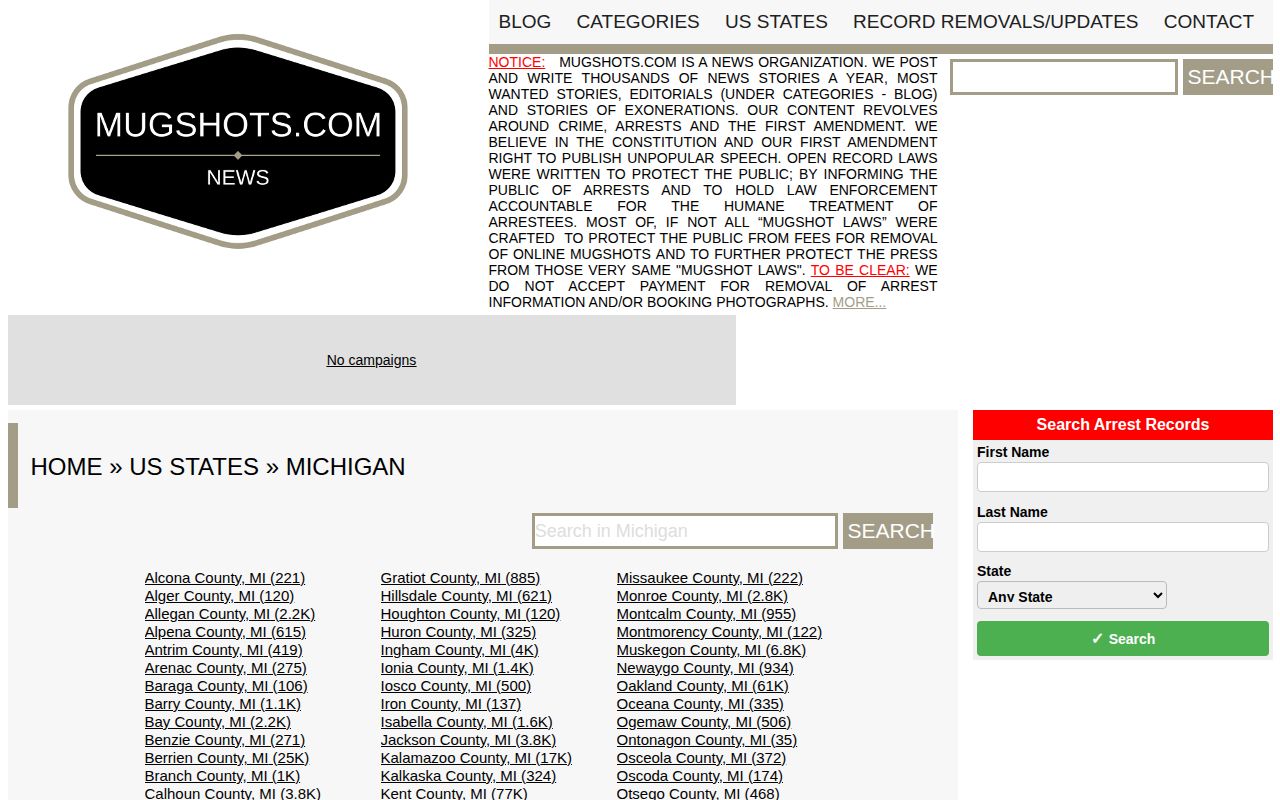
A county index proves nothing about full coverage. Case outcomes can shift after a copy first appears. Busted Newspaper provides a free listing correction or removal route for errors and qualifying outcomes. No publisher works on a guaranteed timeline. Arrests.org lists no clear free statewide process in its public material. Mugshots.zone posts no single Michigan-wide rule. Reach a listed publisher only through its current public instructions. For the official record, rely on the government custodian.
Michigan Warrants and Wanted Lists
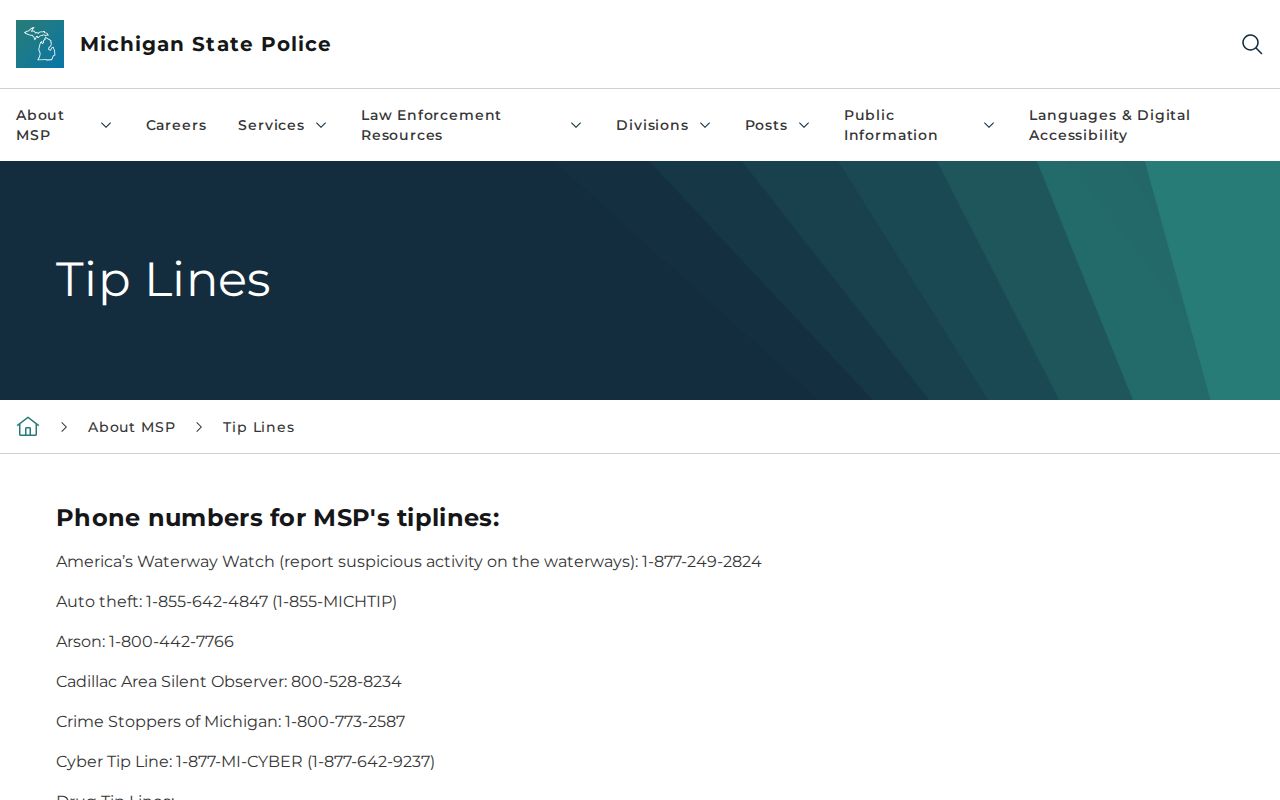
Michigan publishes no statewide public warrant roster. A wanted notice is simply a call for tips. It is not a court finding. It can sit online long after the person is caught. Warrants and jail searches also answer different questions. Someone can have an active warrant yet never spend a night in custody. Others get arrested and released before any roster is checked. The official MSP tip-line page lists 1-877-445-8477 for Michigan's Most Wanted. It also lists 1-800-773-2587 for Crime Stoppers. Both lines take tips. Neither is a warrant-search database, and neither proves a named person has an active warrant.
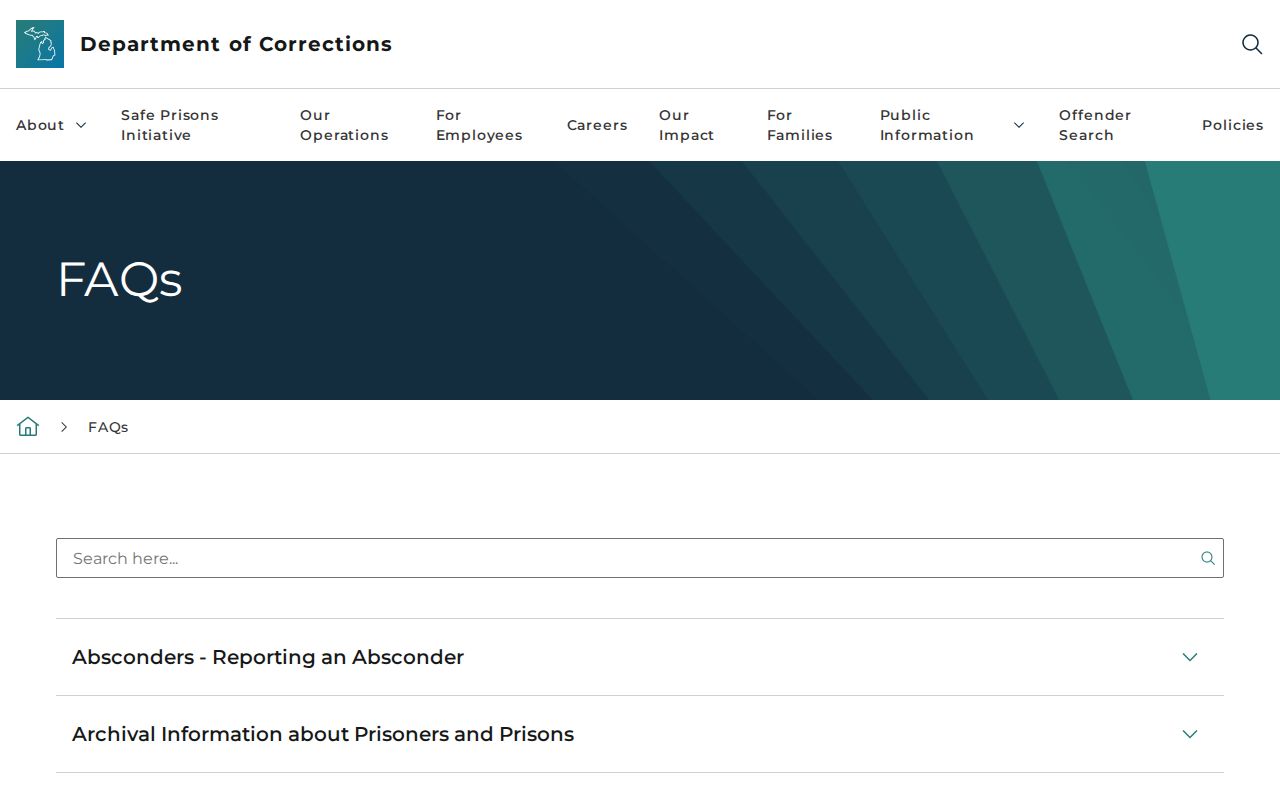
The MDOC public FAQ lists a separate tip line, 517-755-0855, for information on absconders or escapees from state supervision or custody. That line is for tips. OTIS and a county jail roster still answer different questions.
The U.S. Marshals Service Eastern District of Michigan handles federal fugitive work across Detroit, Ann Arbor, Bay City, Flint, and Port Huron. County sheriff and court channels stay local. Use an office's published contact route, or speak with an attorney. MiCOURT is no guaranteed active-warrant search.
After Arrest: Courts and Custody
After an arrest, a person may be released, transferred, held while a case moves forward, or placed in another custody system. The jail keeps the booking record either way. A county roster can stop listing someone the day they walk out. That does not mean the arrest vanished. MiCOURT Case Search is a fair starting point for public case information. The portal is informational only. Juvenile, sealed, confidential, and other excluded matters may not appear. A court clerk confirms the official case record.
Once someone enters state prison, parole, or probation, MDOC's Offender Tracking Information System takes over. The direct OTIS search interface may show custody or supervision status, location, offense and sentence details, and a photo when one exists. It skips fresh arrests and county-jail-only stays.
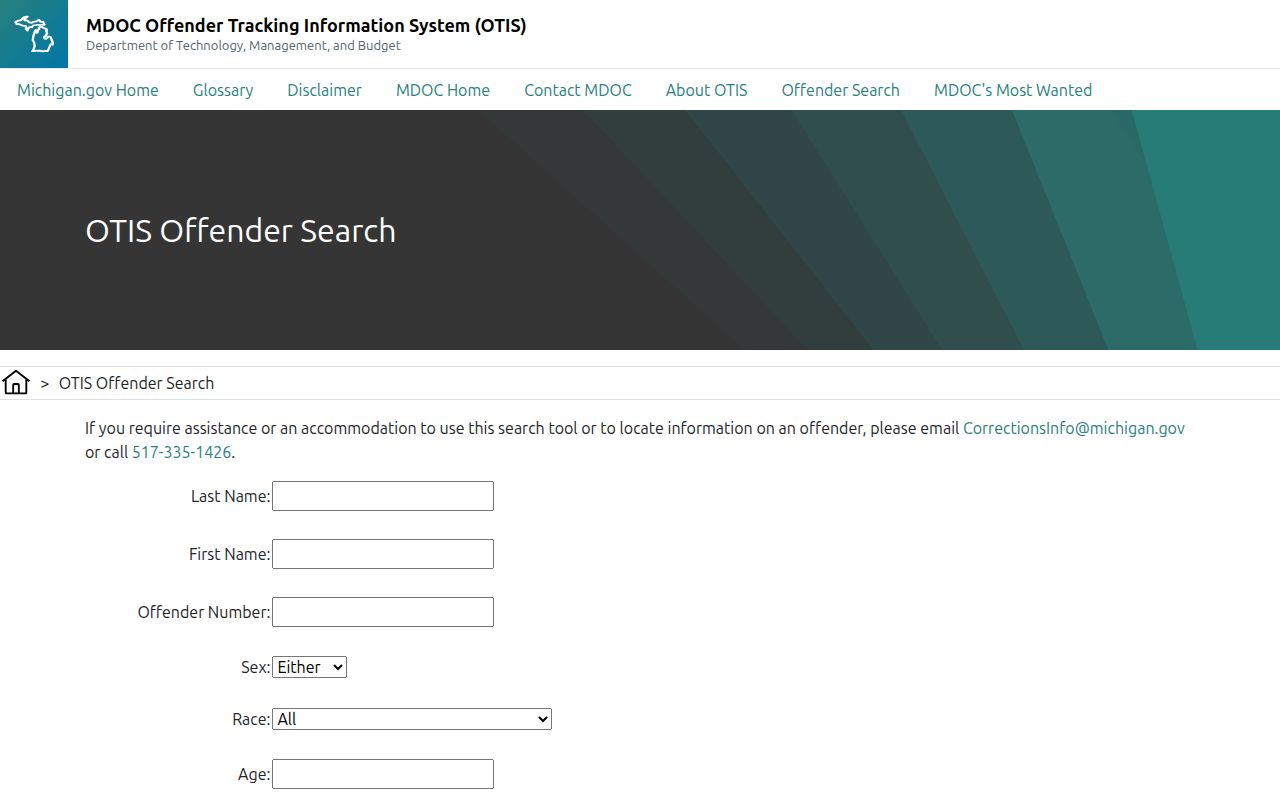
OTIS covers state-supervision records only. Federal prison custody runs through a separate Bureau of Prisons locator. That locator posts no public booking-photo roster and may miss someone held pretrial in a contract facility.
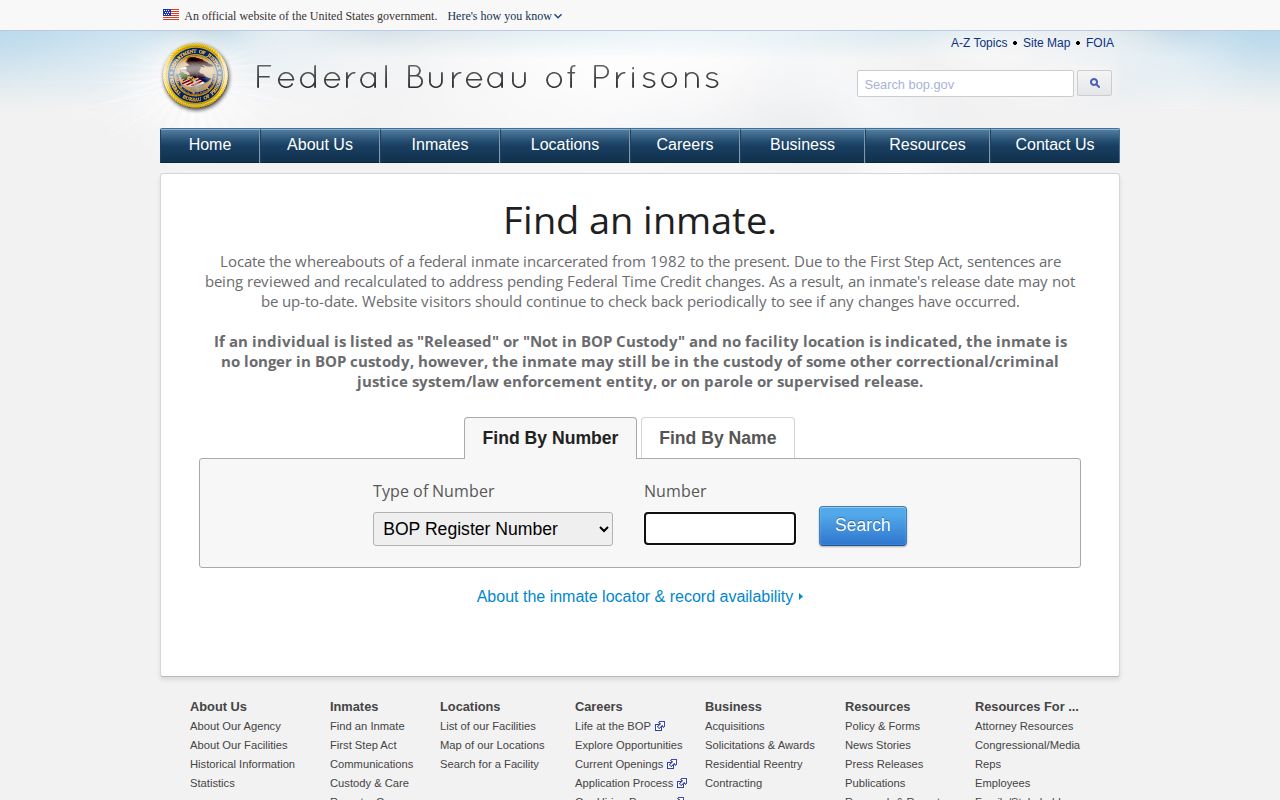
Immigration custody sits on its own track. The ICE Online Detainee Locator follows its own search rules. It cannot replace a Michigan arrest source. An empty result may mean a transfer, a release, a timing gap, a sealed matter, or a different agency holding the person.
Michigan FOIA, Set-Asides, and Photo Updates
Michigan's Freedom of Information Act, MCL 15.231 and following, gives anyone the right to request records from public bodies. Not everything gets released. FOIA exemptions shield investigative files, privacy, confidential sources, victim details, medical data, security, and juvenile records. Booking photos reached the courts. In Detroit Free Press v. Oakland County Sheriff, Michigan's appellate court held the privacy exemption did not justify withholding the booking photos at issue. A later Sixth Circuit federal FOIA case recognized privacy interests in federal mugshots. Each holding rests on its own facts. Michigan law sets no private publication right, fixed removal deadline, or commercial pay-to-remove statute for booking photos.
A set-aside or expungement erases less than people hope. Copies survive everywhere. MCL 780.621 and the sections after it govern automatic set-asides and petitions, with eligibility rules, waiting periods, offense limits, and exceptions that vary by record. The MSP Clean Slate page explains the automatic process. Petitioners file court form MC 227. Court orders can also touch specified arrest-card, fingerprint, and LEIN records. A public source, a private copy, and a search index may each need separate correction. Google's outdated-content request clears its index only.
Some publishers describe free correction routes. Busted Newspaper accepts a free listing correction or removal request for errors and qualifying dispositions. RecentlyBooked's policy covers wrong-person, juvenile, duplicate, sealed, expunged, and inaccurate records. Mugshots.com's record-maintenance page describes free requests in certain cases. Arrests.org posts no clear free process. Mugshots.zone states no Michigan-wide rule. Assume no fee, deadline, or outcome.
Does a set-aside erase every photo? No. State files, private copies, and search results follow separate correction paths. Save the URL and court order, contact the source and custodian directly, and refuse anyone demanding payment to fix an official record. The deeper cases and procedures appear on Are Arrest Records Public?.