Michigan Arrest Records and Access
Usually, yes. An adult arrest record held by a Michigan public body can be requested under the Michigan Freedom of Information Act. FOIA opens the door to files an office already keeps. It does not make every field public. It cannot force a county to build a statewide feed, and it does not promise a record will appear online. Who holds the item matters. So does what it contains. An exemption can still block release.
A booking record shows an officer made an arrest and a jail processed a person. A release can happen before the case ends. Later, a court may dismiss, reduce, or resolve the charge another way.
A booking entry is a dated record of one event. Treat it as a starting point. Case details belong with the court or agency that holds them.
Michigan FOIA Request Rules
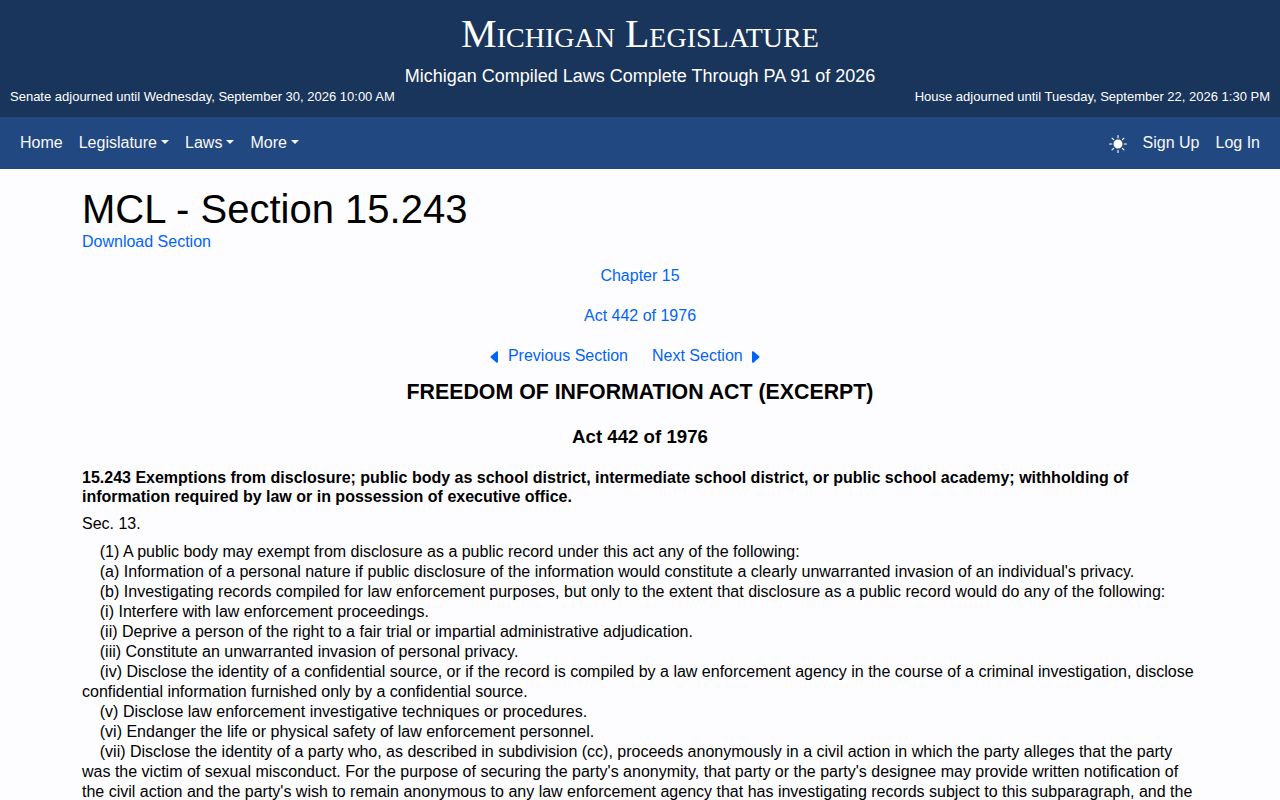
Michigan FOIA governs requests to covered public bodies. The statute sits at MCL 15.231 and the sections after it. Its exemptions at MCL 15.243 are broad. They protect law-enforcement and investigatory material, personal privacy, confidential sources, victim and medical details, and security concerns. An office can release part and redact the rest. When only some fields are sensitive, ask for the separable nonexempt portions.
Under MCL 15.235, a public body generally answers within five business days. One extension can add up to ten business days. The reply may grant, deny, or partly grant it. It can also seek clarification. Those deadlines apply to the response itself, not to when copies arrive. A good denial cites its basis and appeal path.
Fees can cover search, review, redaction, copying, and mailing. Keep the date range tight. Electronic copies cost less, so ask for those and for an itemized estimate before a large charge lands. Michigan law also offers a fee waiver for indigent requesters. An agency never has to build a statewide roster or a date-filtered report on request.
For a booking file, name the person arrested. Give an approximate booking date, the arresting agency, and the county or facility if known. A booking number helps but is not required. Request the booking card or jacket, the date and time, agency name, charges as entered, and bond, release, or transfer details. A photograph may come too, if maintained and releasable, along with any court or docket identifier. Ask the custodian if an old log never existed.
Michigan's Legislature posts an exemptions list for FOIA requests, and it explains when an arrest record can come back only in part.
Michigan Juvenile Record Limits
Juvenile matters skip the ordinary adult-record path. MCL 712A.28 does not open juvenile court records to the general public. The statute may grant access for a legitimate interest. Court rules add their own limits on juvenile social files and juvenile-history information.
Never publish a juvenile's name or photograph. Never guess an adult identity from a juvenile event. A blank result proves little. The information may be confidential or simply outside the search system. Adult records can be withheld too when they expose an active investigation, a confidential source or victim, protected medical details, or a security concern. A public roster can show less than the full booking file.
Find Michigan Arrest Records
The right office depends on the record. A county jail or sheriff may hold the booking jacket and custody entry. The arresting agency keeps its own incident report. A court holds case events and later outcomes. Michigan State Police releases describe selected enforcement, not a statewide jail roster. Use the County Directory to route a county question to the right local source.
Keep record types distinct. A current roster can confirm custody. A brand-new booking may not appear at once, though. A court portal shows outcomes, not a live arrest feed or photo archive. The statewide MSP arrest-news page collects the agency's public releases. For the wider photo and roster landscape, see the Michigan statewide lookup overview.
- Start with the county where the arrest or booking occurred, using the directory to reach that county's current official roster or booking page.
- If no public result appears, contact the county sheriff or jail records custodian and ask whether the person was booked there. A missing web result alone does not settle the question.
- For a copy, send a focused FOIA request to the body that keeps the item. Identify the person and date range, name the exact records sought, and ask for a fee estimate and any nonexempt portions.
- For later court events, use the state court's case-search tool as an informational starting point, then confirm with the clerk. A portal result is not the official court file, and excluded or confidential cases may not show.
Michigan Photo Release Rules Vary
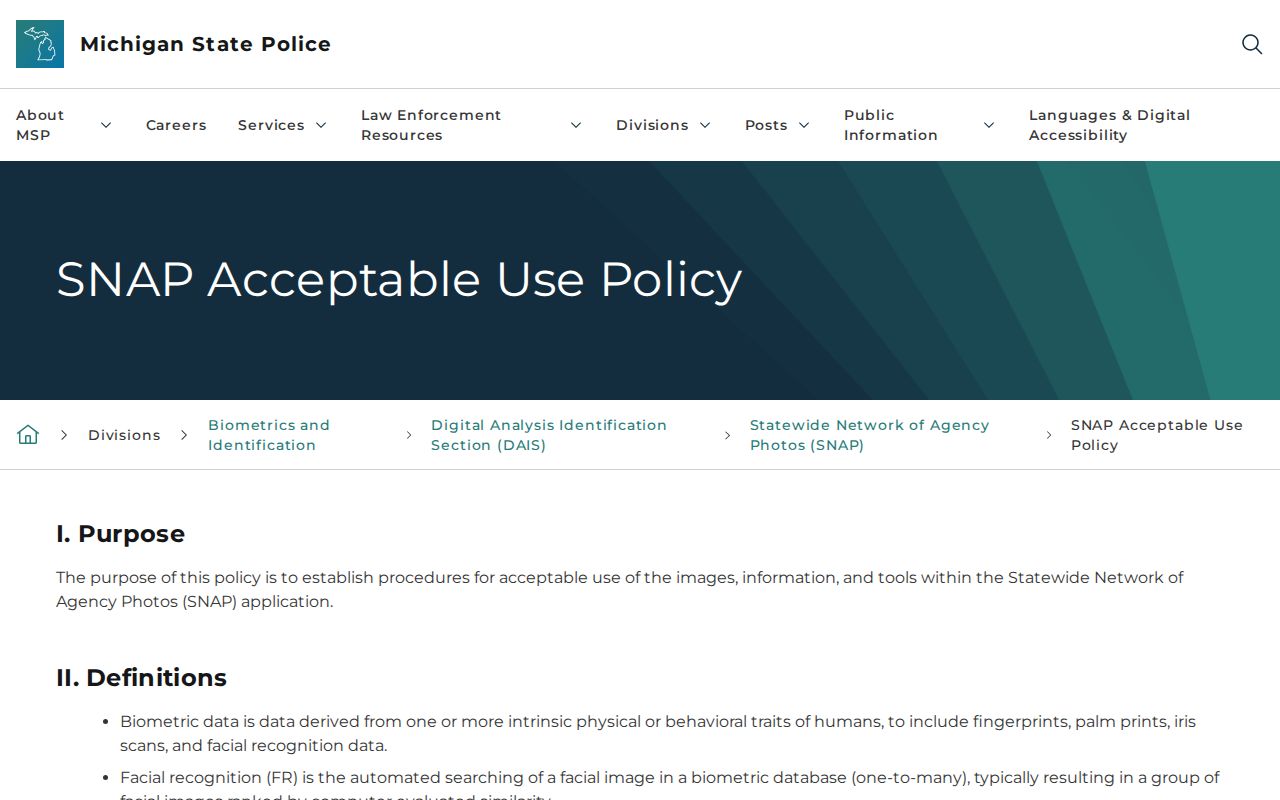
A booking image may sit in an agency file. The public roster may show nothing. Michigan State Police policy for its Statewide Network of Agency Photos leaves release practices up to each agency. The originating agency's approval may be required. FOIA can override that gate. The arresting agency, the booking jail, and the source of a shared image may be three different offices. A portal labeled statewide does not promise one uniform photo policy.
Michigan appellate cases lean toward access. In Detroit Free Press v. Oakland County Sheriff, the Court of Appeals ruled against the sheriff. The privacy exemption could not be used to withhold the booking photographs at issue. That holding stops short of ordering every county to post every image. Each record request still turns on the custodian. The exemptions claimed and the facts of the request matter too.
The MSP SNAP policy describes agency-by-agency differences in photo release.
Federal law adds a wrinkle. In Detroit Free Press v. U.S. Department of Justice, the Sixth Circuit found a privacy interest in federal booking images under federal FOIA and required a public-interest analysis. The ruling did not disturb Michigan's state appellate decisions. The practical answer: ask the custodian who holds the record, and expect a decision shaped by that context rather than a statewide promise to publish every booking photo.
Michigan Set-Asides and Images
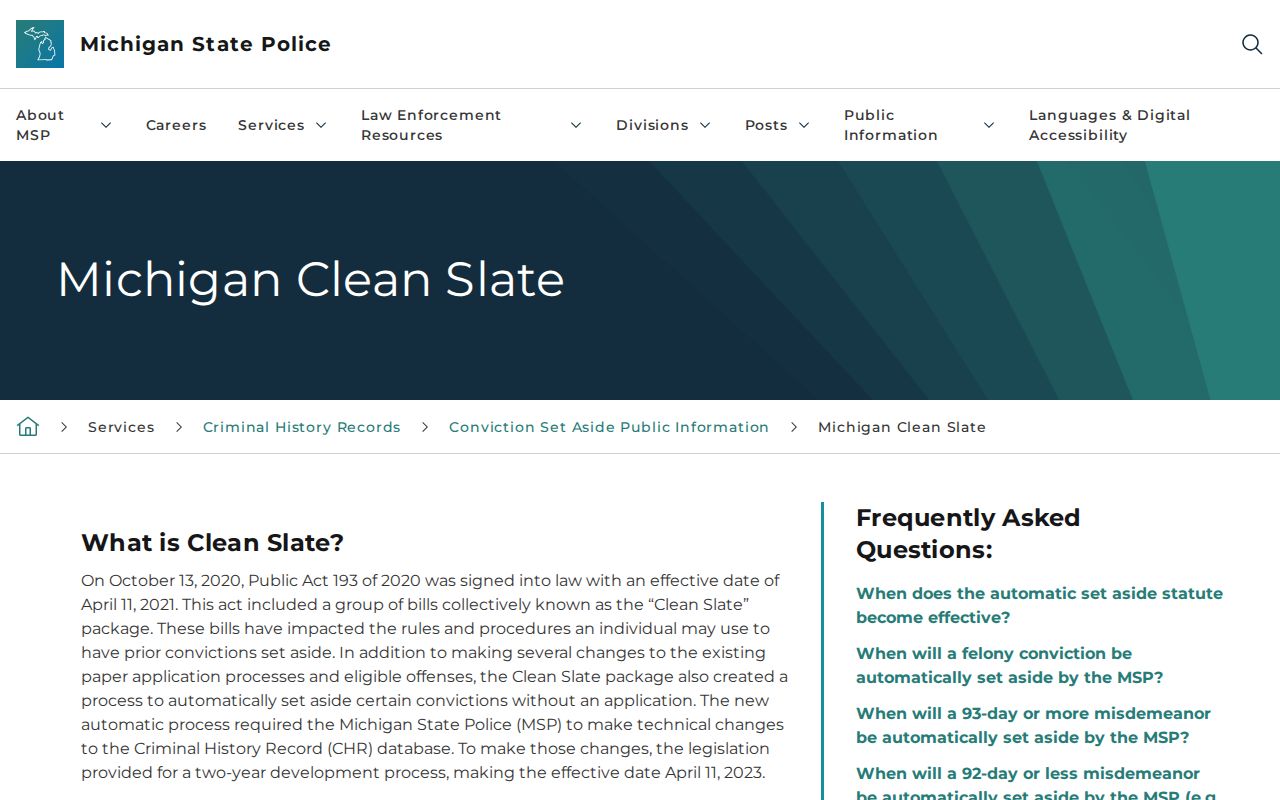
Michigan's set-aside framework lives in MCL 780.621 and following sections. Automatic set-asides exist under MCL 780.621g. Petition-based relief runs through MCL 780.621d. The Clean Slate laws began taking effect on April 11, 2021. Eligibility depends on the type and number of convictions, waiting periods, any pending charges, and statutory exclusions, so a person should read current law and get legal advice for an individual case.
Petitions go to the court where the conviction happened. Convictions spread across different courts may need separate applications. The approved court form is MC 227. A dismissal before trial follows a different legal path from setting aside a conviction. The court's exact order and its legal basis control whether agency-held arrest cards, biometric data, fingerprints, and related records must be changed.
The Michigan Clean Slate page explains automatic and petition-based set-asides.
A set-aside does not destroy every copy of an image already made. The Michigan Courts' explanation of expungement effects addresses this. Authorized nonpublic records can stay with the state. Their uses are limited. A private publisher or search engine may hold its own copy. That copy needs its own correction request. Treat an old image as just that: an old image.
Free Corrections for Michigan Records
If a record is wrong, belongs to someone else, is juvenile, sealed, or has a later disposition, keep the page address and the date checked. Contact the official custodian first. For a private copy, use only a correction or removal route that the publisher currently describes as free; provide a court order or other proof when needed. A free request may still be denied if the publisher's stated criteria are not met.
| Source | Free route described | What to expect |
|---|---|---|
| Michigan public body | Request correction from the record custodian; use FOIA for access to existing records. | Ask for the source record to be checked and for any lawful correction. Exemptions and retention rules still apply. |
| Busted Newspaper policy | Free requests for errors and qualifying outcomes such as dismissal, expungement, sealing, or a not-guilty result. | Keep the listing URL and supporting court material. The policy does not set a response deadline. |
| RecentlyBooked policy | No-charge update or removal requests for listed qualifying cases, including wrong-person, juvenile, duplicate, and sealed or expunged records. | Accurate, current public information may remain. A request is not a promise of removal. |
| Mugshots.com policy | No charge for certain record-maintenance requests, including some sealed, expunged, restricted, or identity-theft situations. | A favorable outcome may lead to an update rather than full removal. |
| Other secondary pages | No statewide free policy was established for Arrests.org or Mugshots.zone in the reviewed material. | Use a current contact or dispute route only if the page states one; do not assume coverage or timing. |
The RecentlyBooked policy page lists its own correction and update criteria.
Never pay an intermediary that claims money is required to correct a Michigan record or remove a copied image. Michigan law sets no commercial mugshot statute requiring payment, no mandatory free removal, and no fixed notice period. No statute bars private publication in every circumstance either. That gap is not a ruling on the legality of any particular publication, nor a promise that every booking photo must be released.
A corrected source page can still linger in results. Google's outdated-content request asks for a search index refresh. It does not touch the court record or the publisher's page. Check each step yourself, since one request rarely removes every copy.
Michigan Booking Record Archives
Michigan agencies cannot simply toss old jail files. The state DTMB requires an approved retention and disposal schedule before any public record is destroyed. Under General Schedule 11, approved May 6, 2025, item 11.210 covers jail inmate jackets. That series spans intake and booking materials, photographs, classification, release and transfer papers, court records, bond documents, and warrant files where an agency maintains them. Retention runs until release plus ten years. Then the file is destroyed, unless a legal hold or the schedule itself says otherwise.
One caution is worth stating. A general schedule proves nothing about any single county. Each county jail may hold different items, or none in this series. And retention is not the same as public online access. A booking file can sit in storage for decades without ever appearing on a website. A scheduled destruction date says nothing about when a web page comes down.
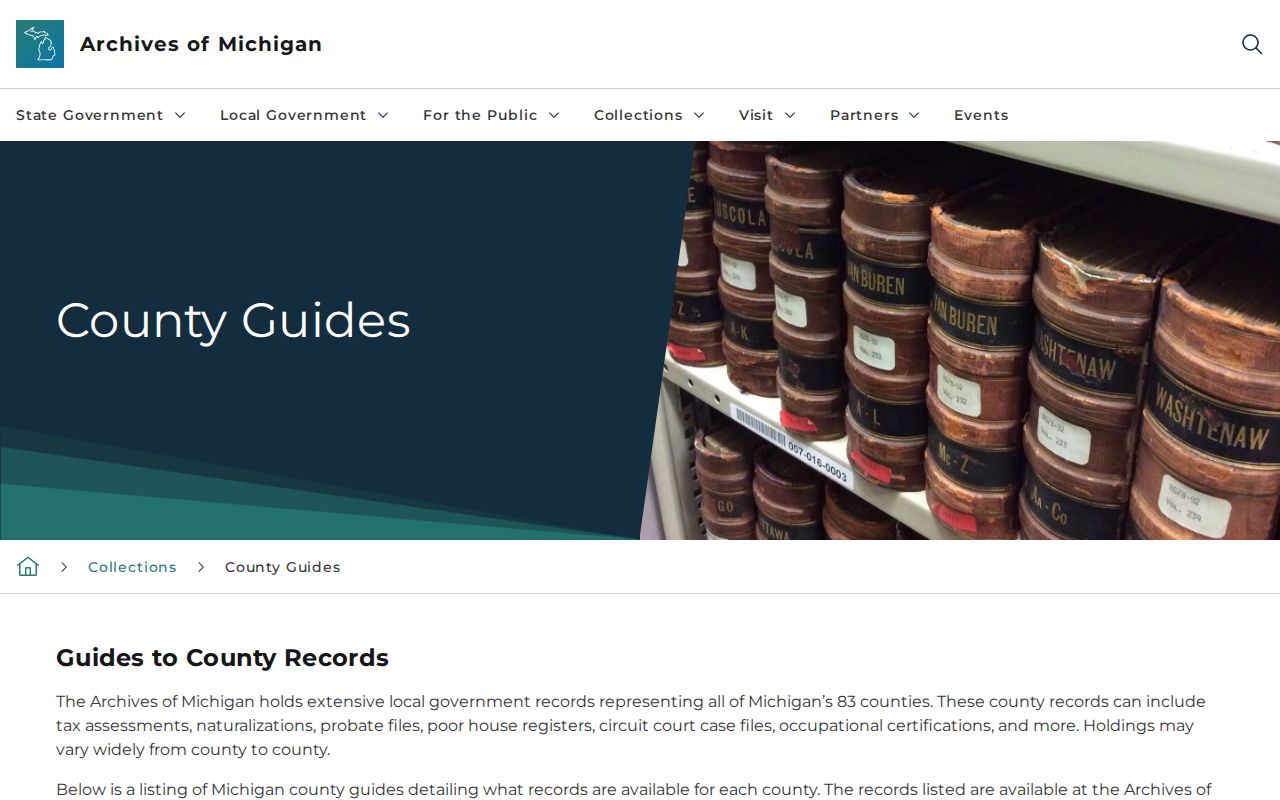
For archival digging, start with the Archives of Michigan catalog and its county guides. They cover all 83 counties. They do not, however, form a searchable statewide arrest-photo index. Ask the staff directly. Does a named collection exist? What access limits apply? Are scans or copies offered? A strong historical request names the custodian, the person, the date range, and the record type, then asks whether the file was transferred or destroyed under a schedule.
A county guide in the Archives does not mean that county's booking photos survive there. MDOC records and old prison publications sit apart from county intake files. A reply that a record was destroyed under an approved schedule means something different from a reply that it never existed or was withheld. Draw that exact line when you follow up.
The Archives of Michigan county-guide page helps identify historical collections and custodians.